When cladding spraying makes sense
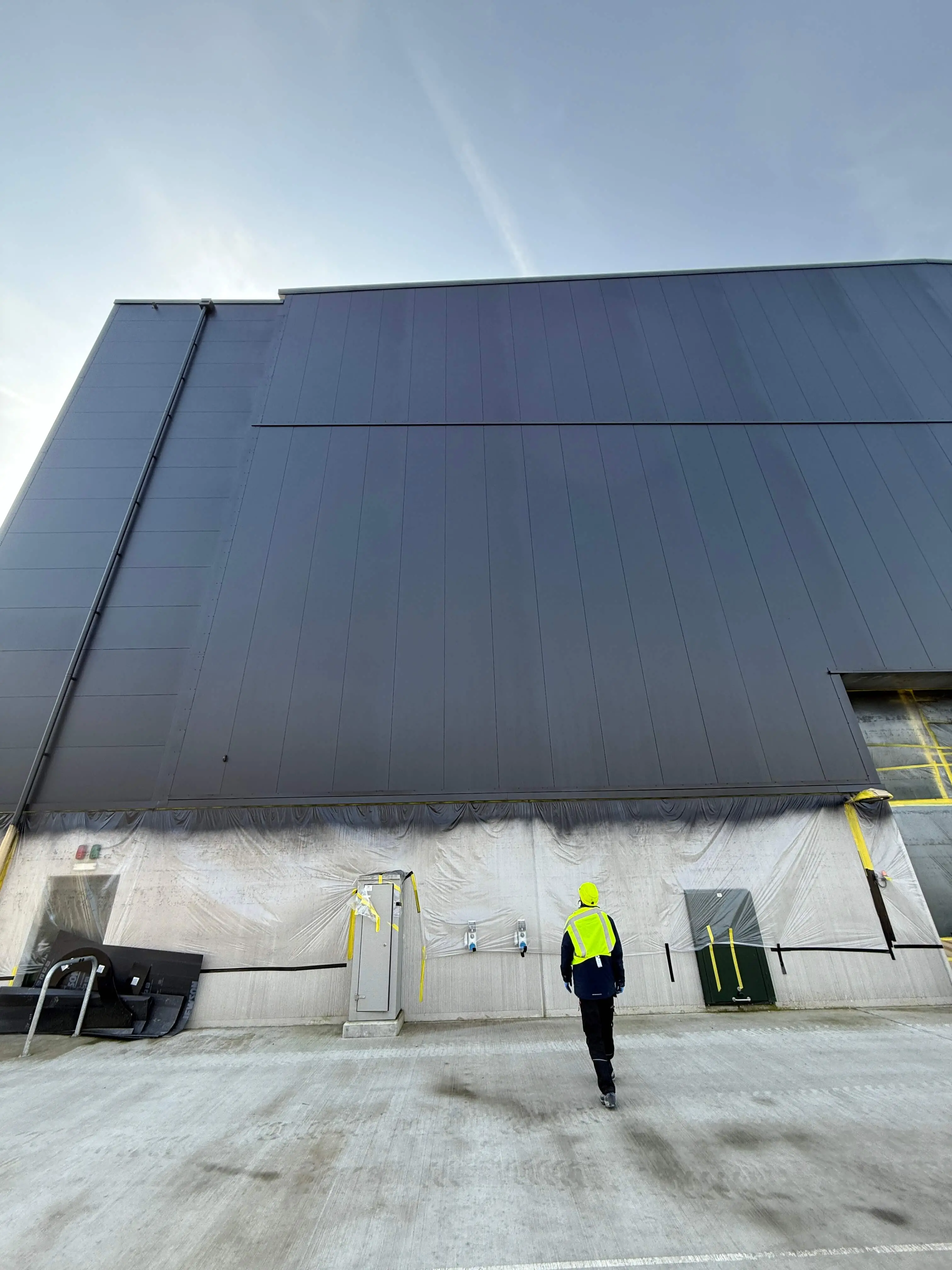
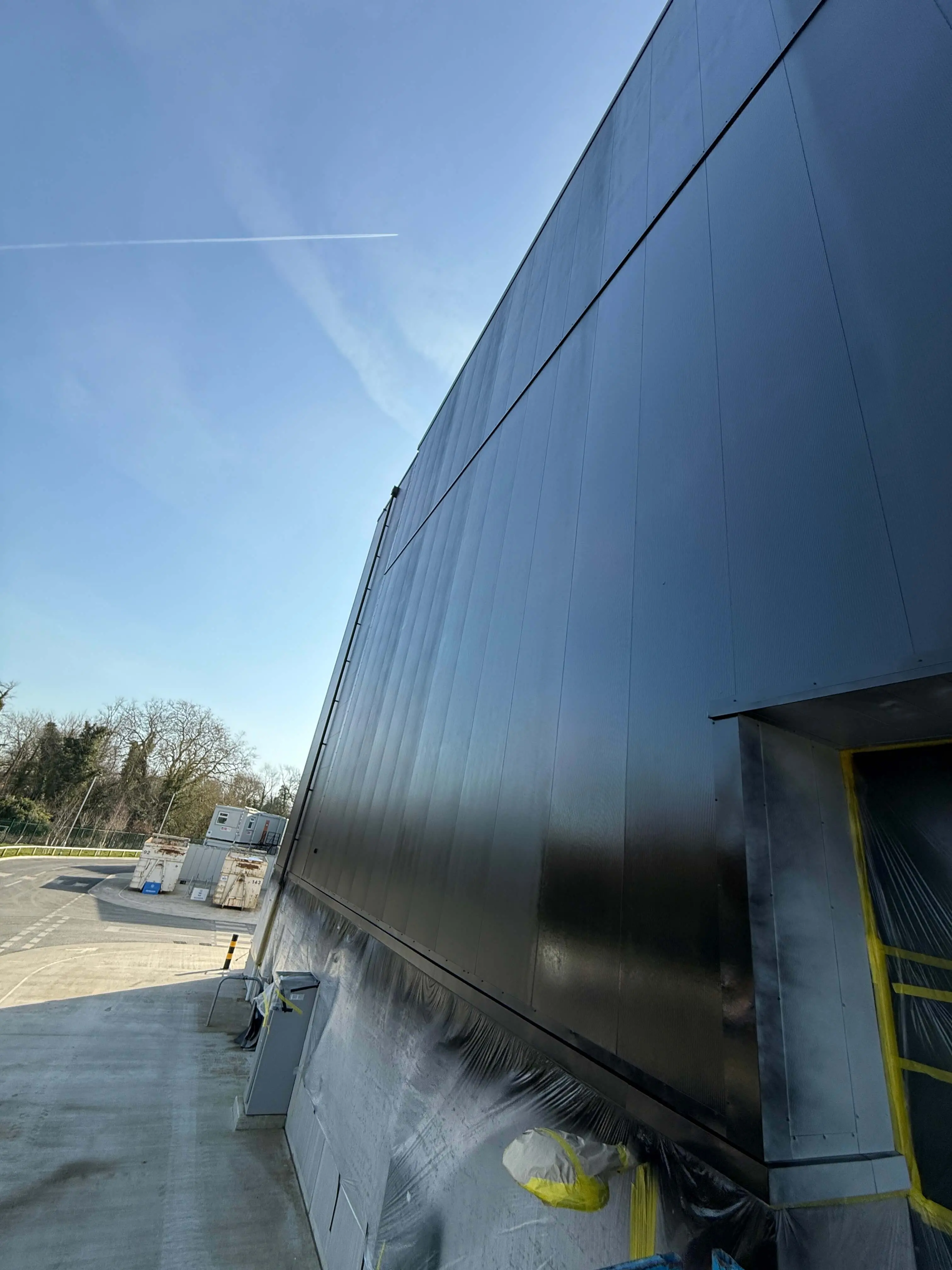
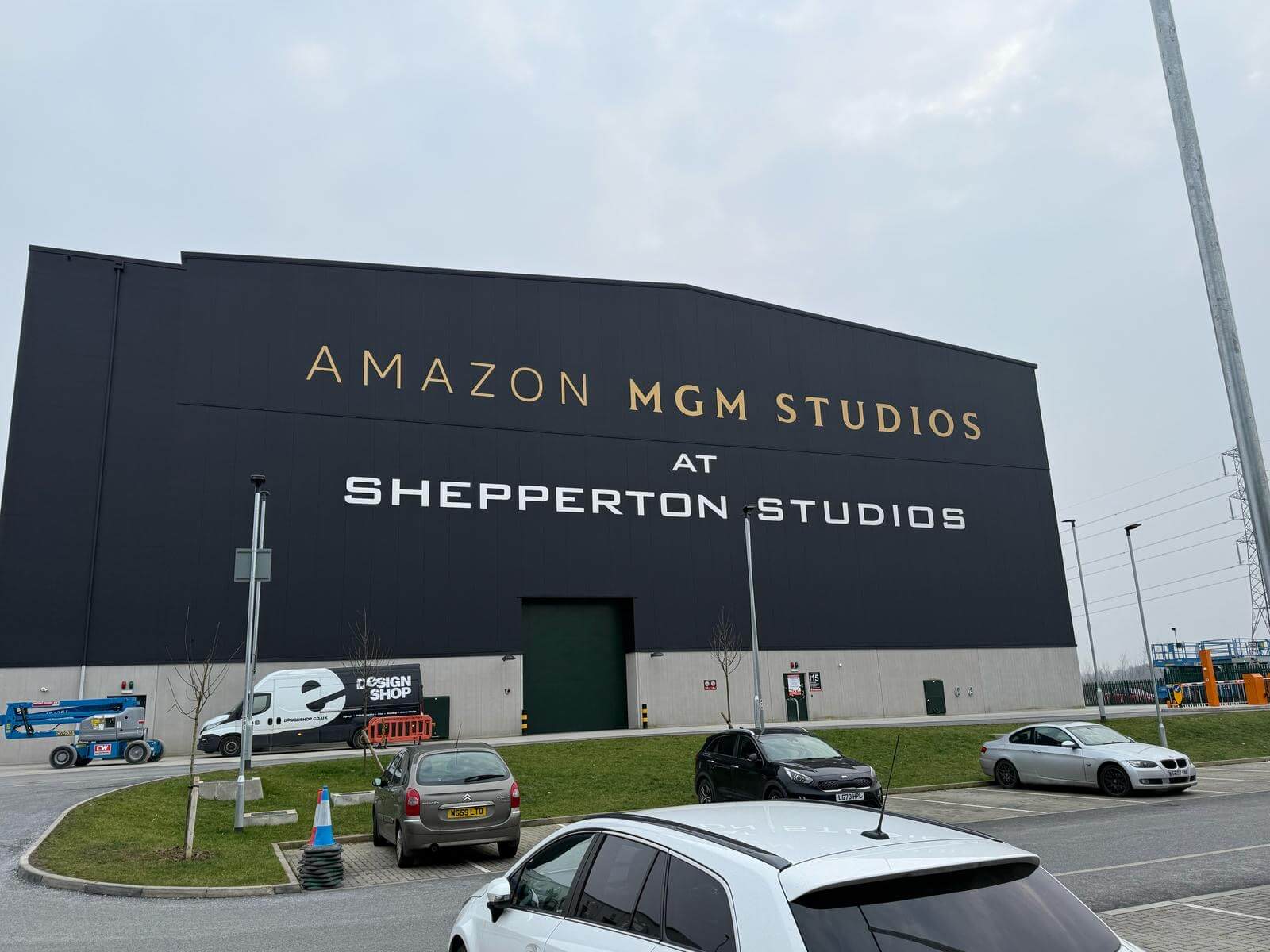
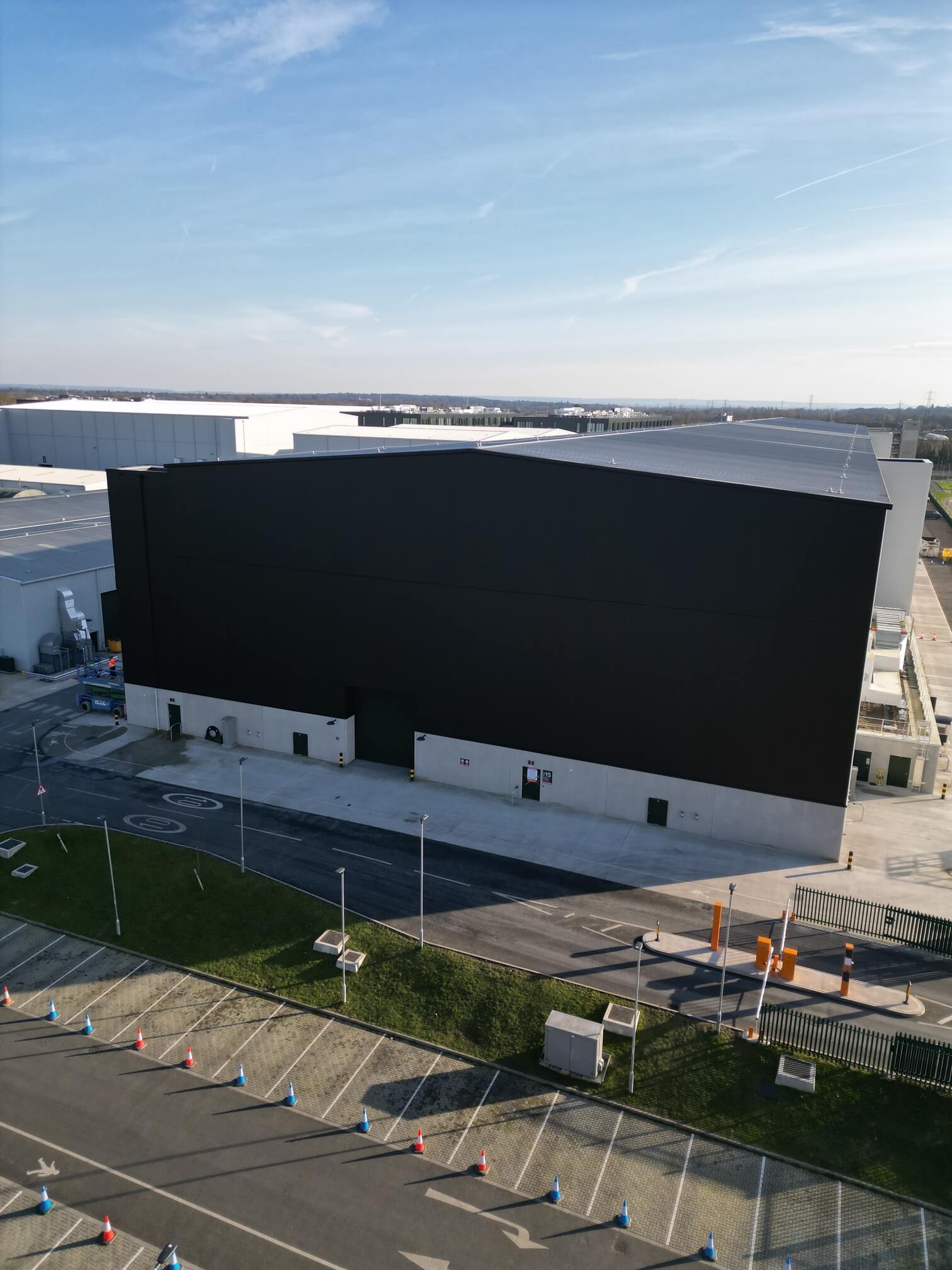
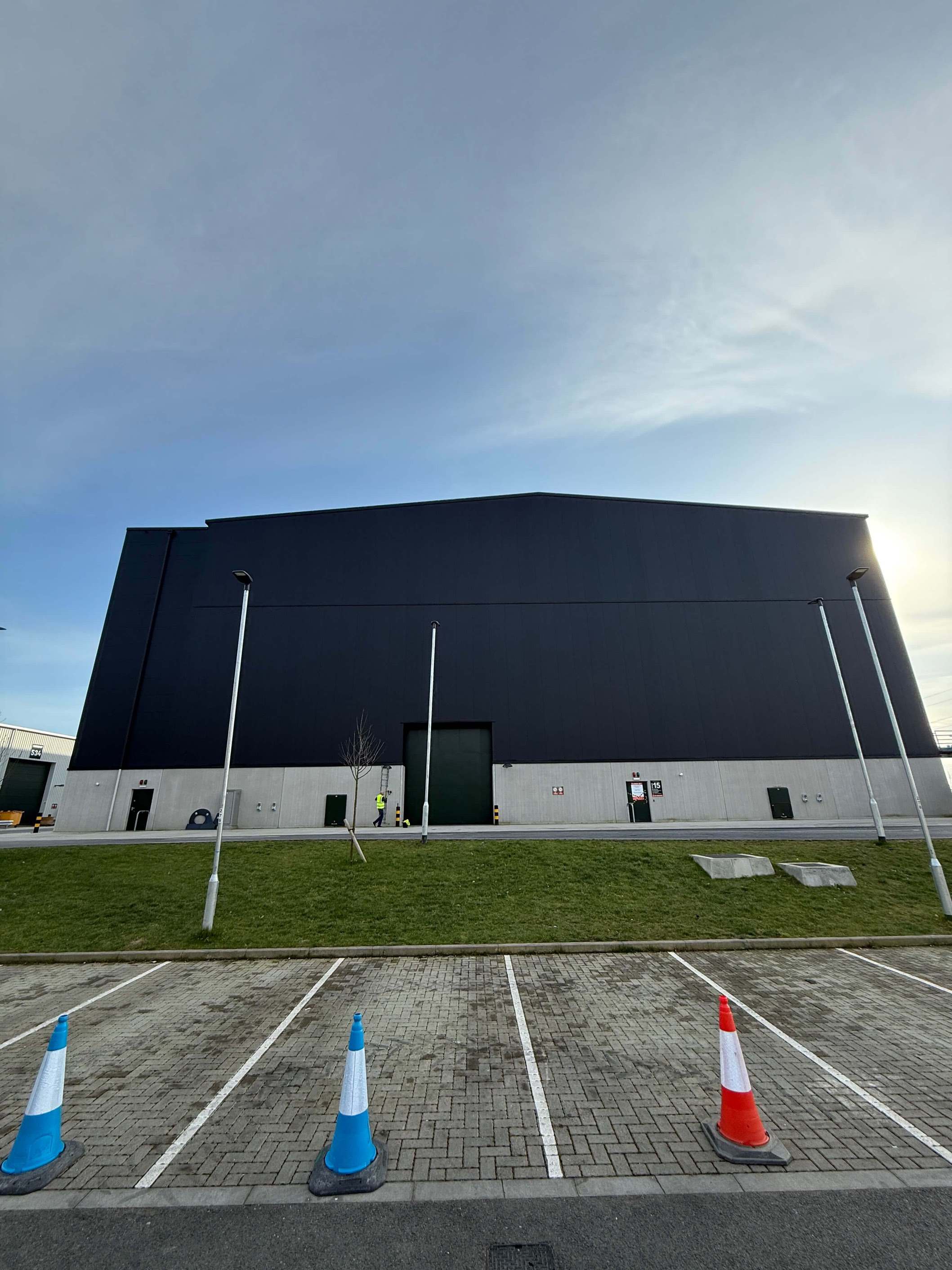
Cladding spray painting refurbishes the visible finish on suitable external metal panels. It can refresh a warehouse, bring several units into a consistent colour scheme or update an elevation before a new tenant moves in. Where the panels remain serviceable, recoating can avoid some of the material replacement and associated disruption involved in recladding.
A coating cannot correct structural defects, extensive metal loss or an unsuitable wall construction. The first decision is therefore whether the cladding can be refurbished, whether local repairs are needed, or whether sections require replacement. Appearance and condition need to be considered together.
Understanding the existing surface
Factory coated steel, galvanised steel and aluminium do not all respond to the same preparation or paint. Existing finishes may also have become chalky, brittle or poorly attached over time. Refurbs reviews the panel material, previous coatings, exposed metal and contamination before setting out the proposed work.
A test area can help establish compatibility and show how the chosen colour and sheen will look. This is particularly useful where the existing coating is uncertain or several previous repairs have created an uneven surface.
Preparation before the finish
Cleaning removes dirt and other contamination that could prevent adhesion. Loose coatings are removed, sound edges are feathered, and corrosion is prepared to the requirements of the selected system. Bare or repaired areas receive the specified primer where required. A sound existing coating may be retained when it is compatible with the new finish.
The scope should distinguish local preparation from widespread coating removal. This matters commercially: two elevations of the same size can require very different amounts of work. Treating the underlying condition helps avoid repeating a failed repaint.
Coatings, colour and application
The system is selected for the substrate, exposure and desired appearance. Options may include specialist water-based cladding finishes or suitable two-component coatings; the choice is confirmed for the project. A product used successfully on one building should not automatically be assumed suitable for another.
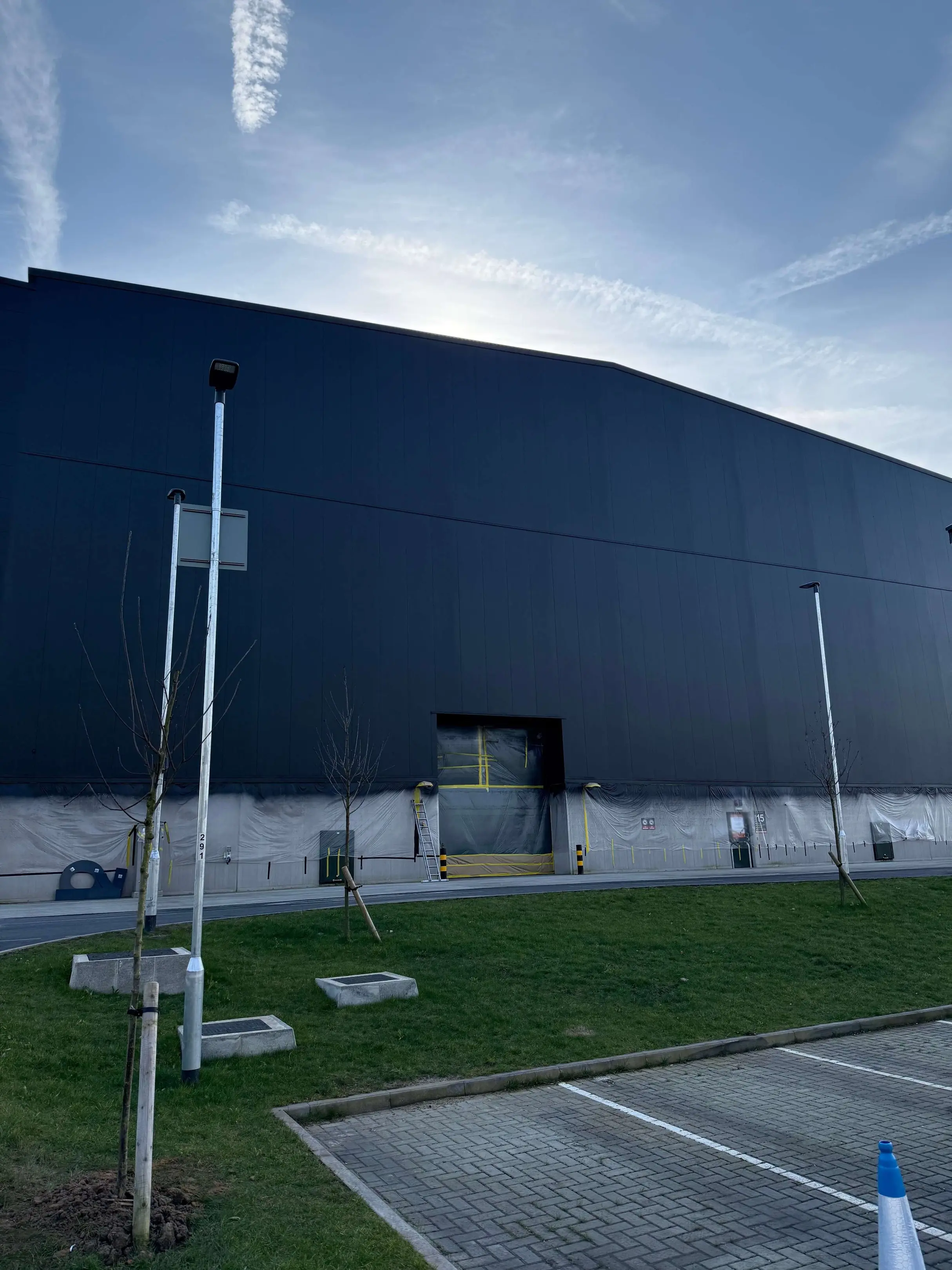
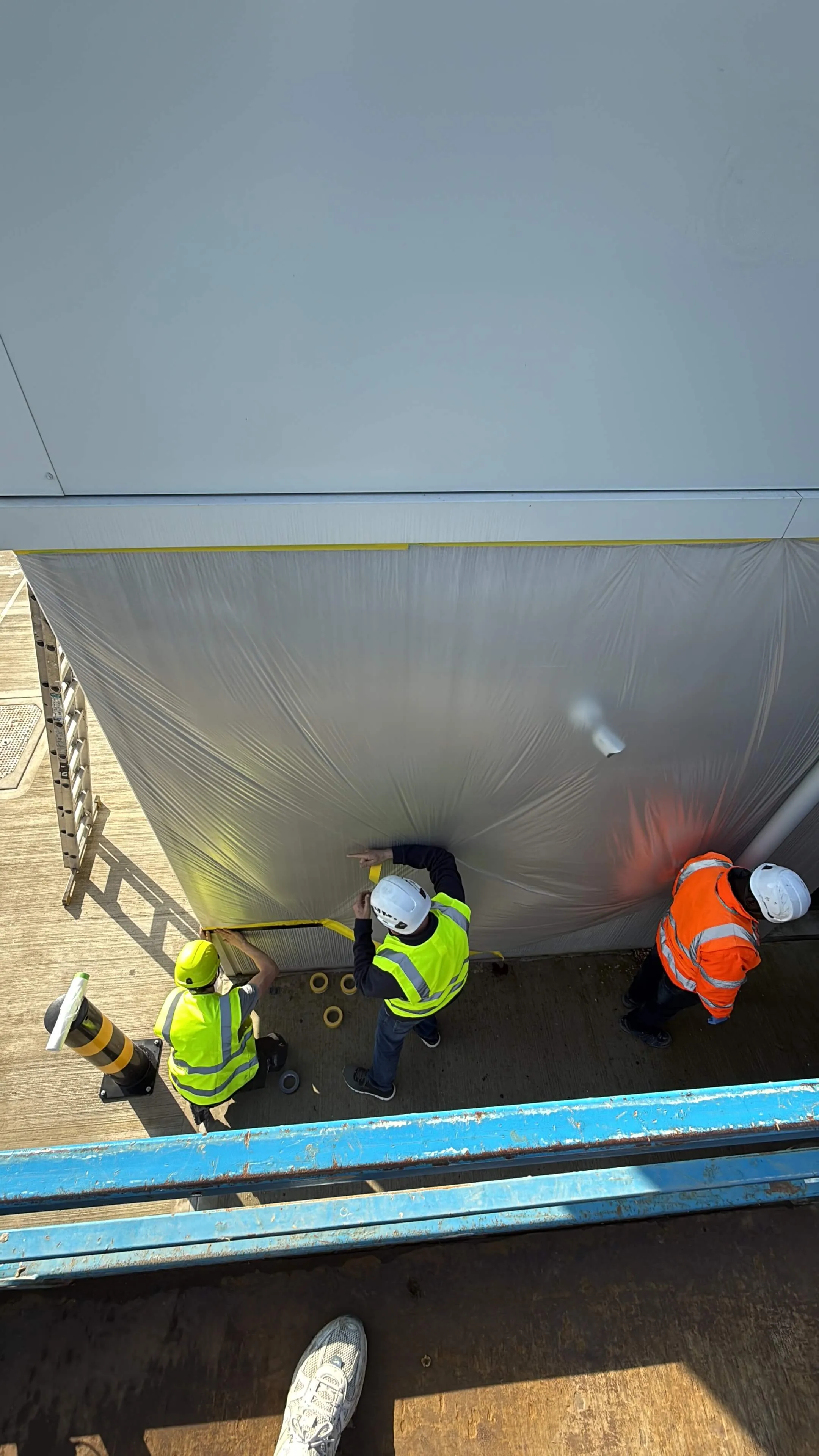
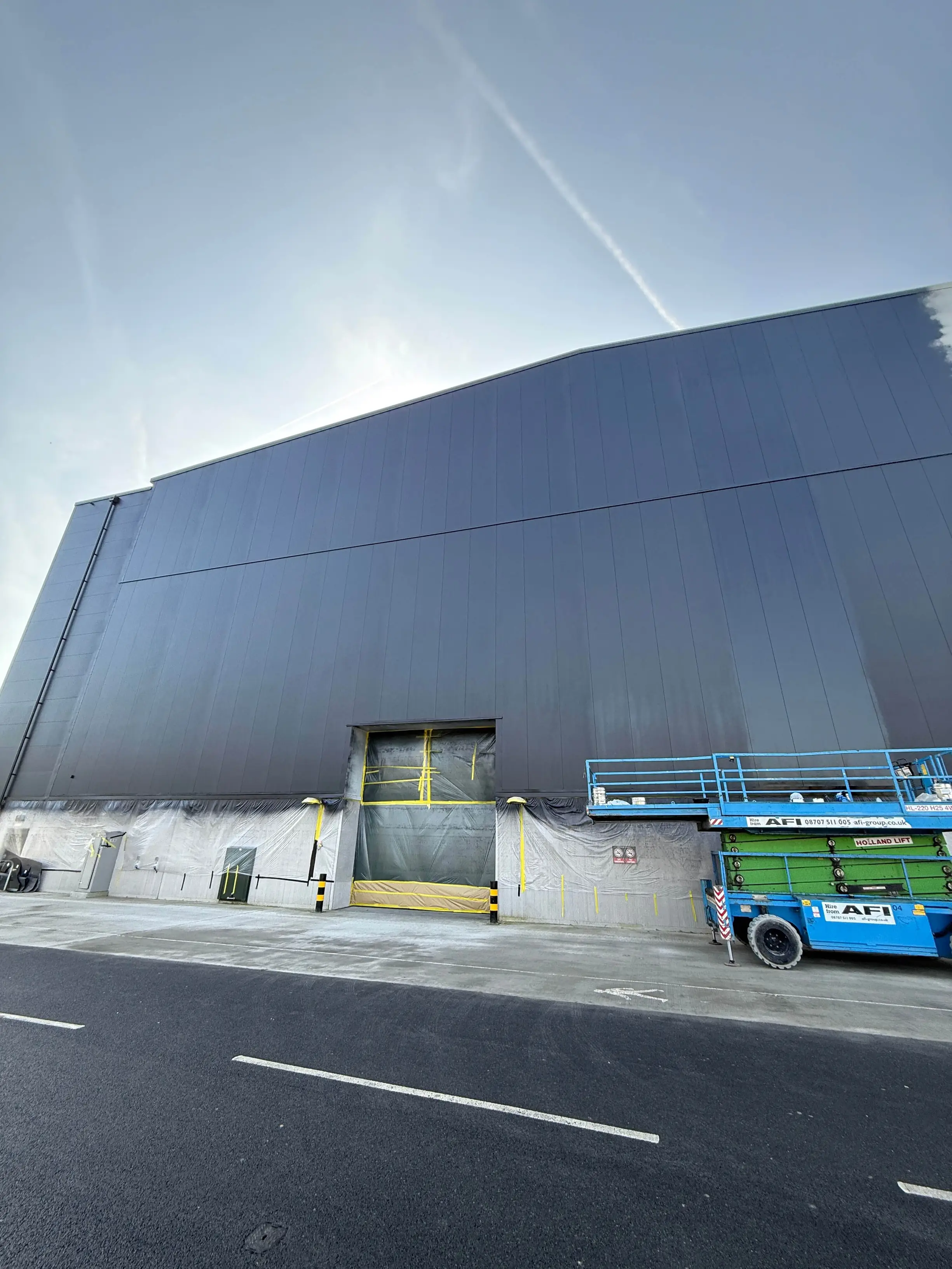
Spraying can produce a consistent finish across large profiled elevations, with brush or roller application used where the specification or detail requires it. Glazing, doors, signs and adjacent surfaces need protection. Wind and application conditions influence when external spraying can proceed.
Keeping the site workable
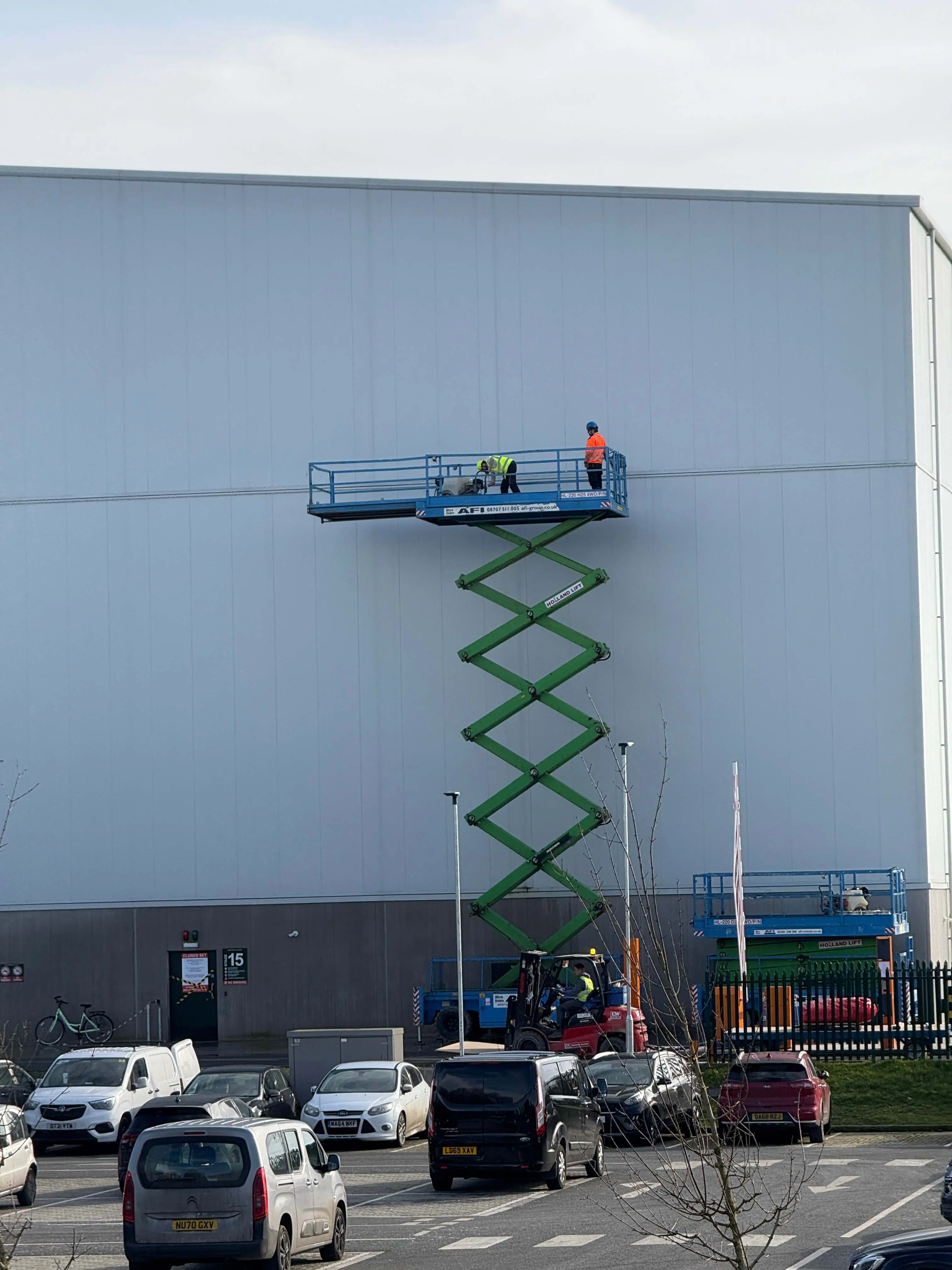
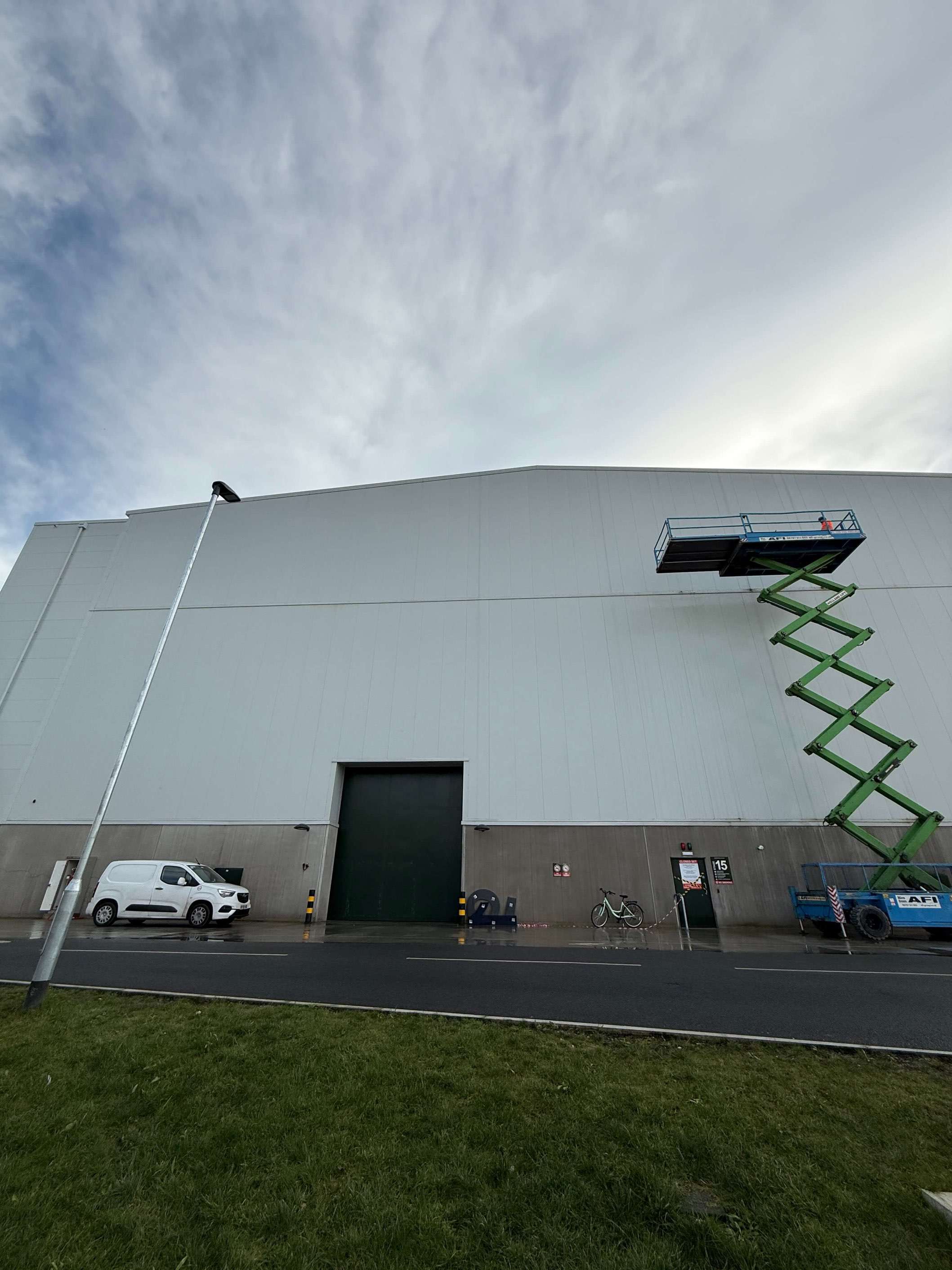
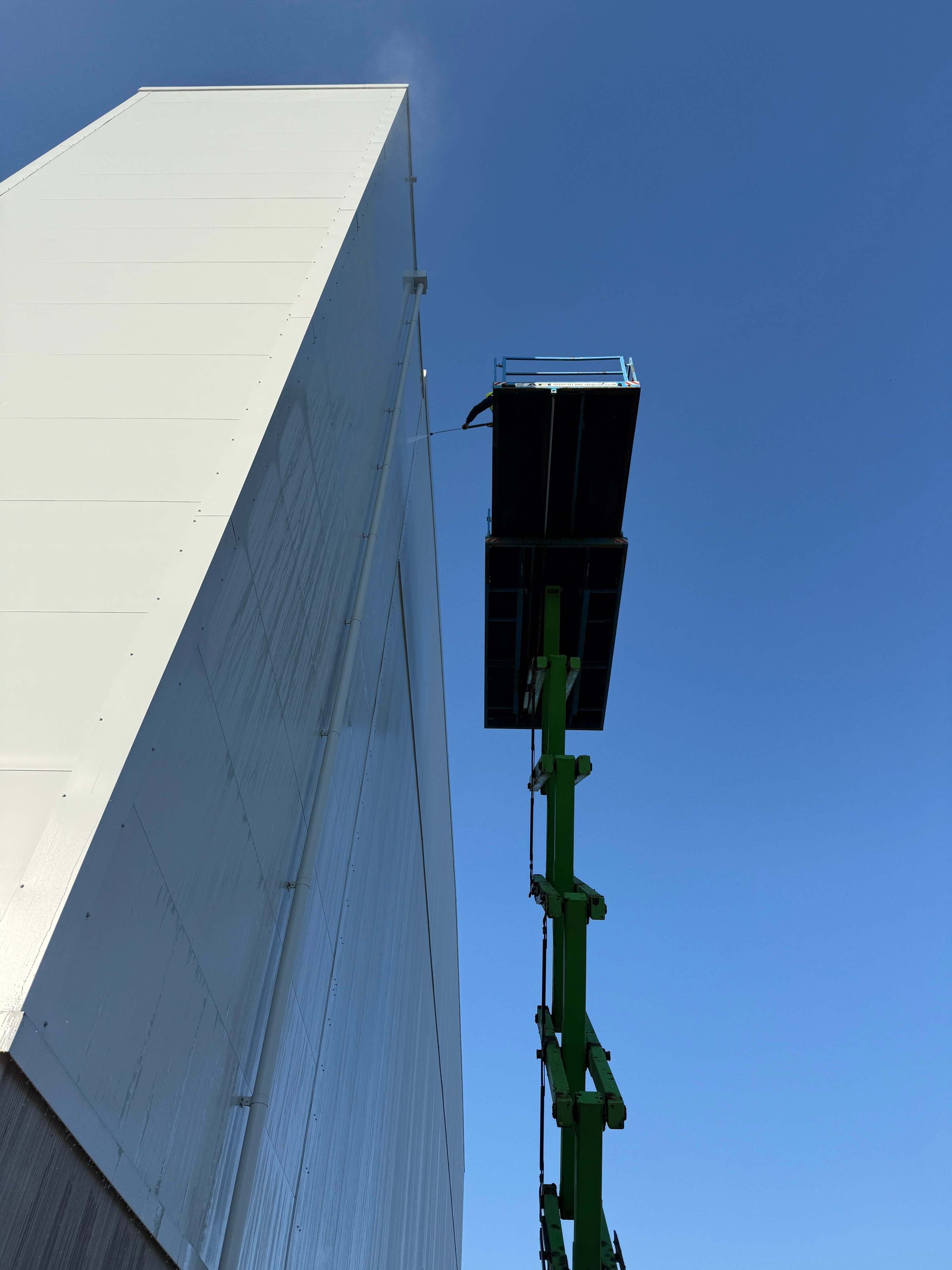
We discuss entrances, loading bays, parking, neighbouring property and tenant activity before agreeing work zones. Mobile elevating work platforms, commonly called MEWPs, or other suitable access equipment must be matched to the ground conditions and reach required. Spray areas need separation from people, vehicles and sensitive equipment.
Phasing by elevation can make a project easier to manage, but temporary restrictions may still be necessary. Agreed communication and access arrangements give the site team time to plan deliveries and day-to-day activities.
Handover and future care
Finish checks, any outstanding details and the recommended cleaning approach should be covered at handover. Periodic inspection helps identify local damage before it spreads. Keeping records of the coating and colour also makes future touch-ups or estate-wide refurbishment easier to specify.