Industrial cleaning as a service in its own right
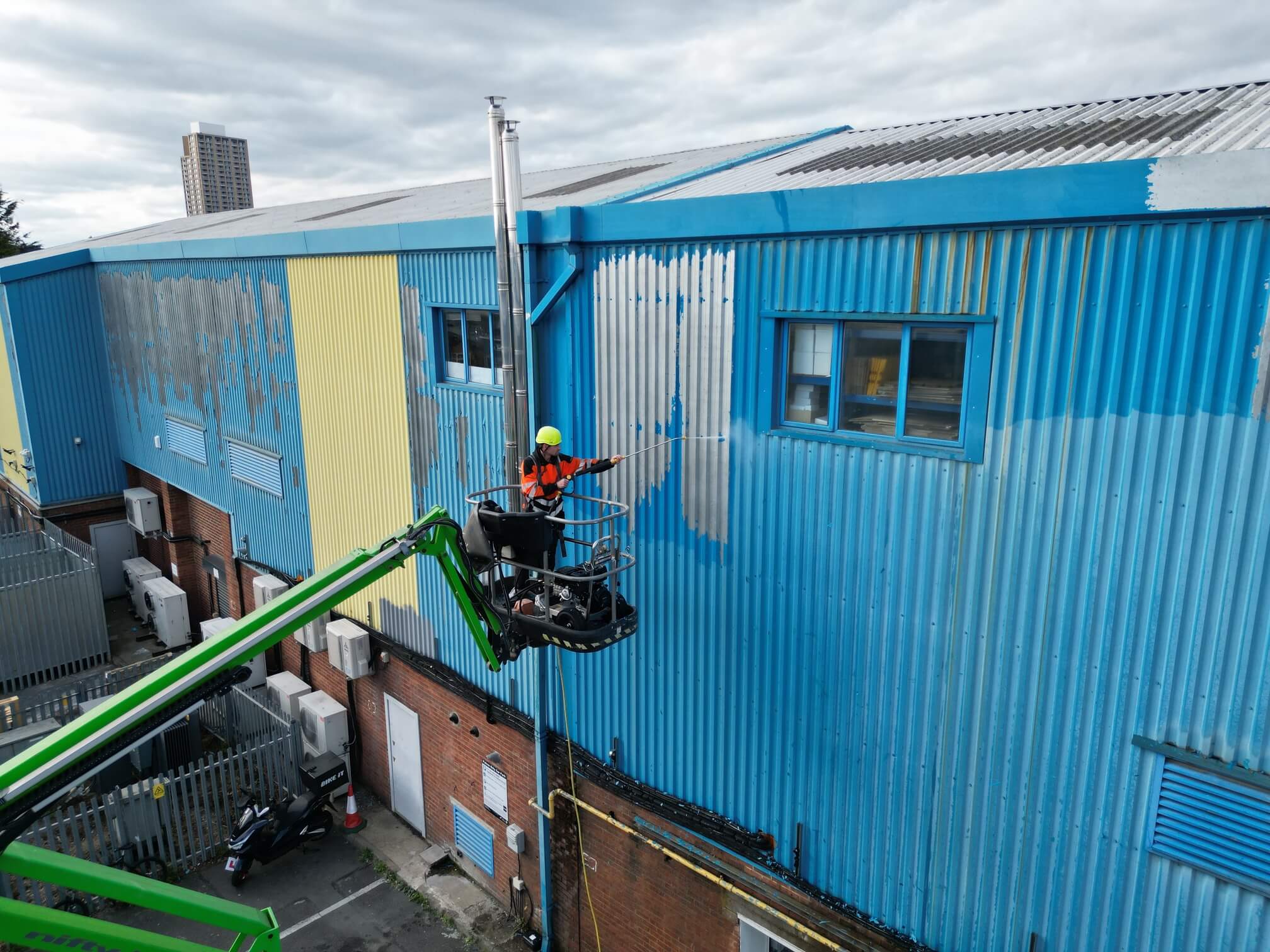
Industrial cleaning tackles accumulated dirt and deposits beyond an ordinary day-to-day clean. It can improve the appearance of a warehouse, refresh commercial elevations or prepare a service yard for a new occupier. The work can be booked as a standalone service, without committing to painting or refurbishment.
A useful scope identifies the surfaces to be cleaned and the result the client expects. General grime, grease, loose dust and weather staining are different problems. Establishing the deposit and substrate helps select a method that cleans effectively without causing unnecessary damage.
Areas that can be assessed
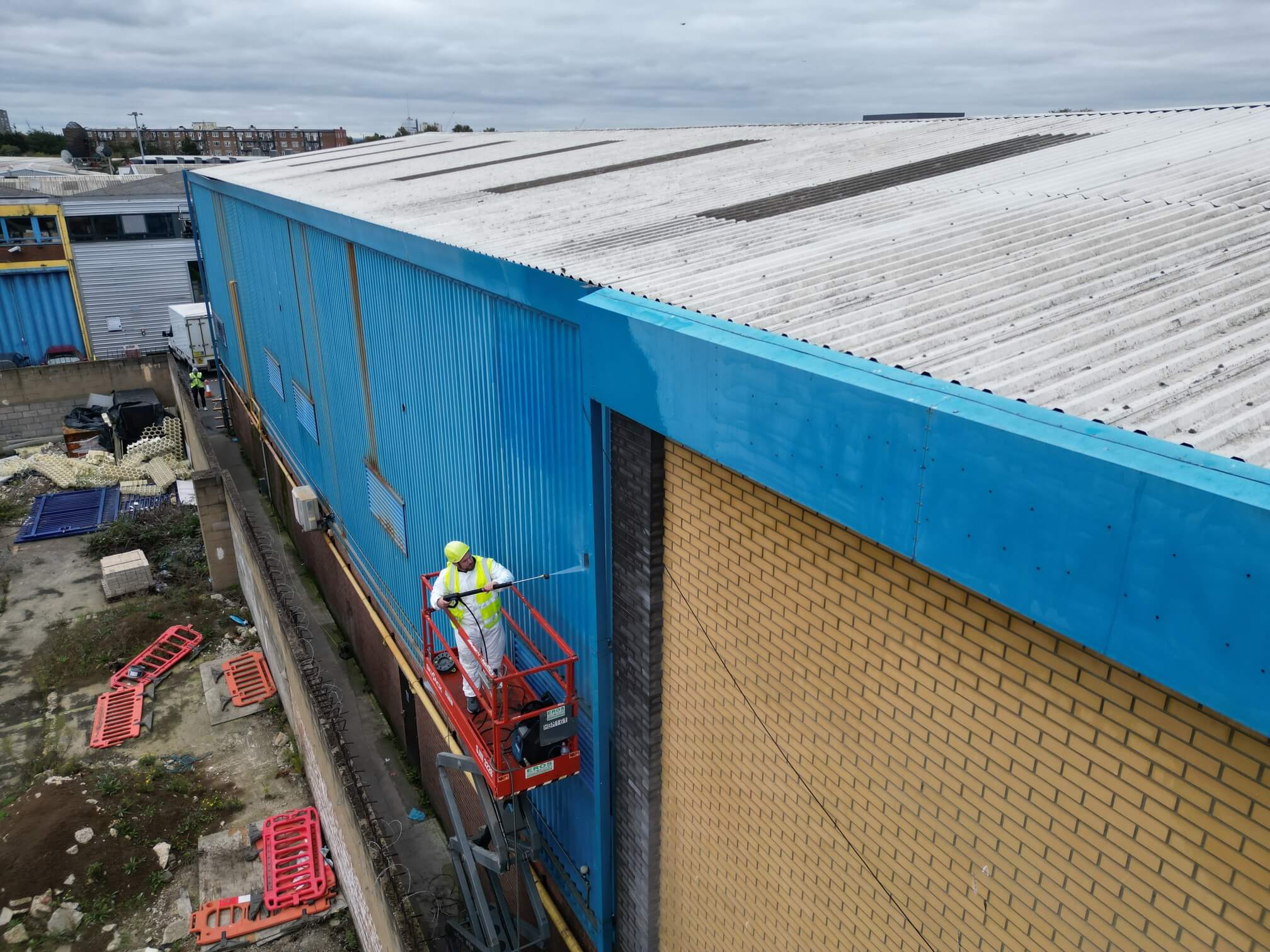
Projects may include external cladding, façades, accessible high-level surfaces, floors, loading areas and other agreed parts of commercial premises. Each presents different access and protection requirements. The enquiry should identify whether the area is occupied, whether stock remains in place and whether nearby equipment is sensitive to moisture or dust.
Work on machinery, hazardous residues or hygiene-critical processes needs a specific scope and the necessary specialist competence. A building clean should not be assumed to include internal plant cleaning, decontamination or production hygiene certification.
Choosing a suitable cleaning method
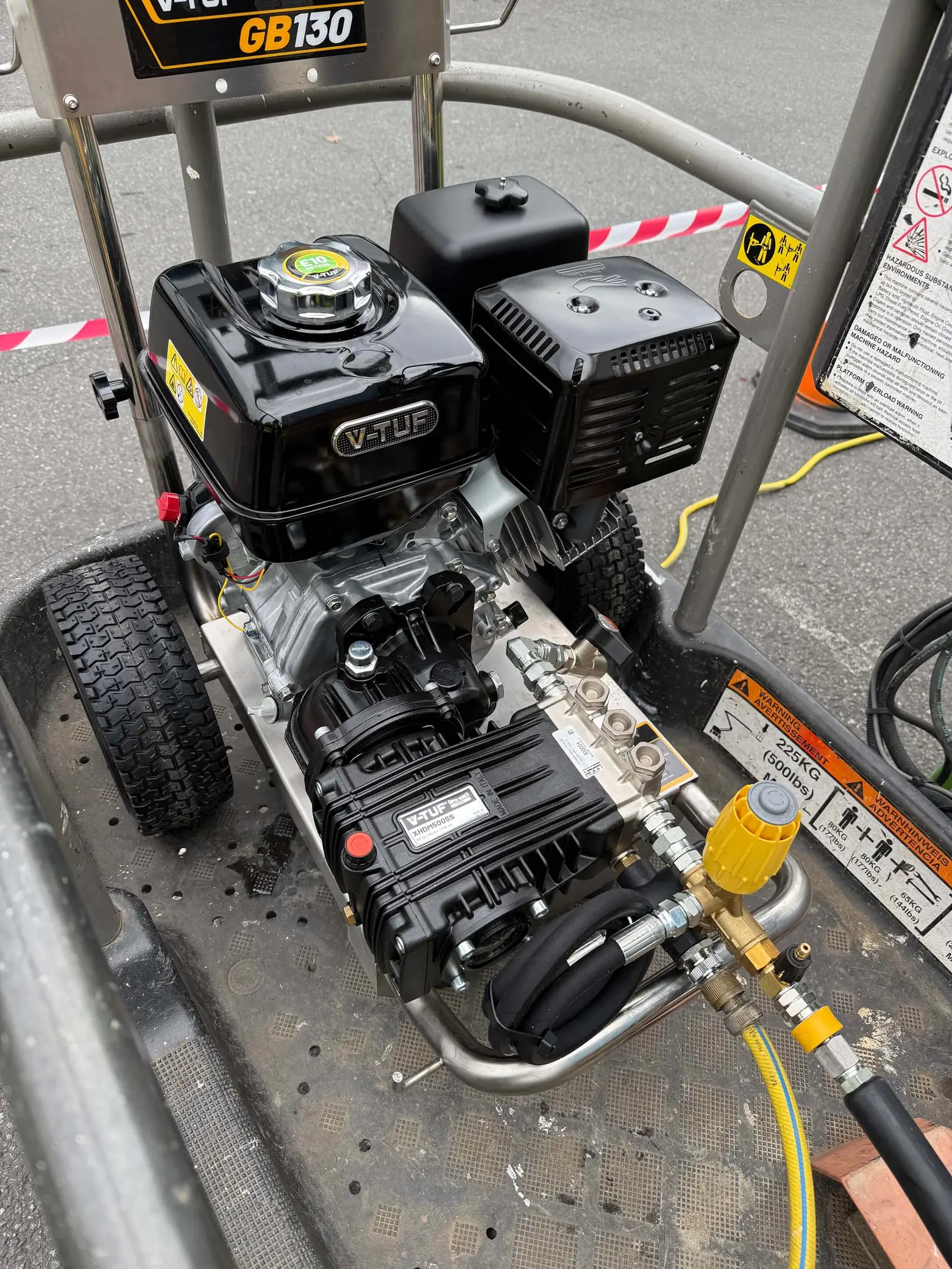
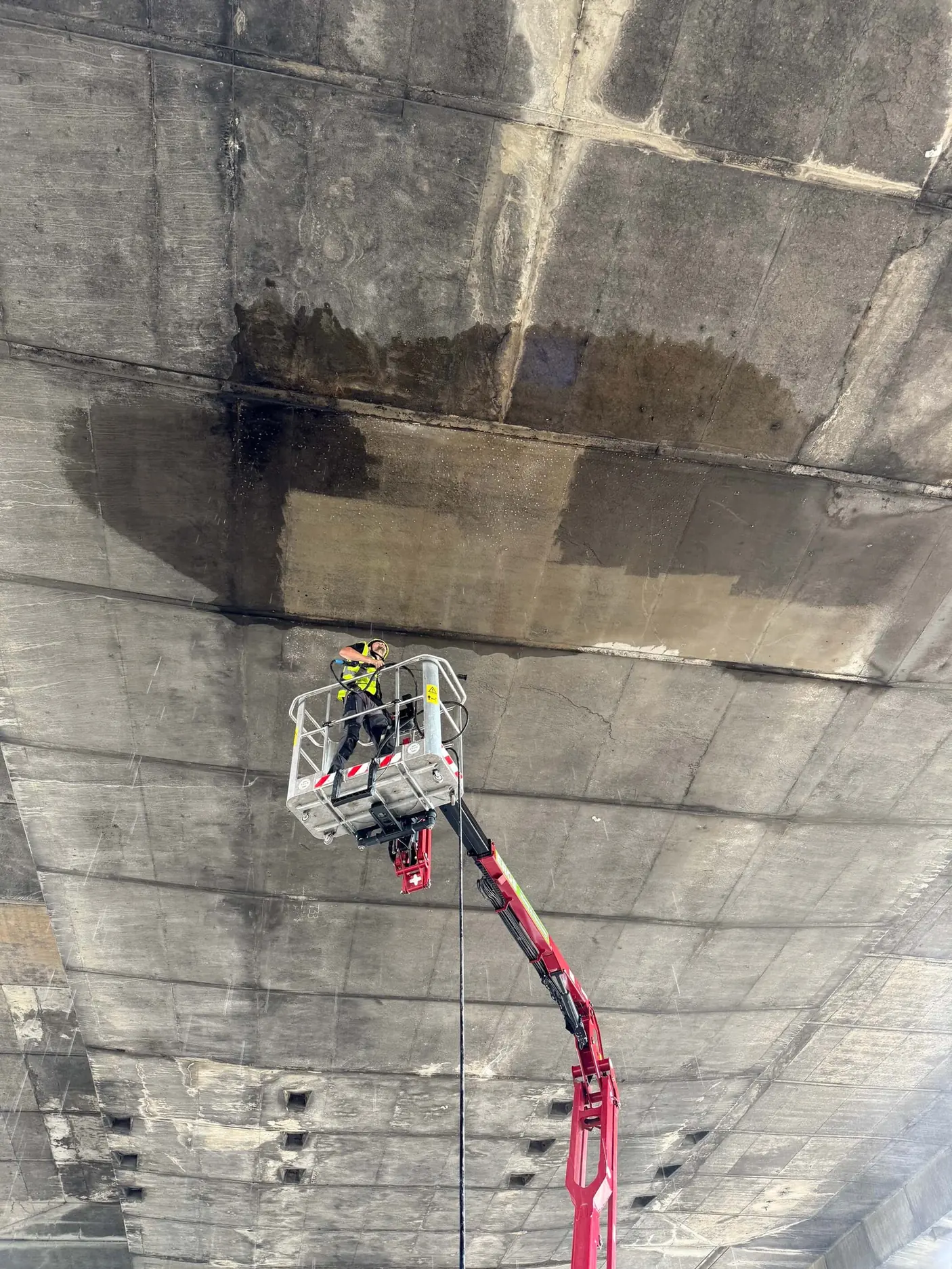
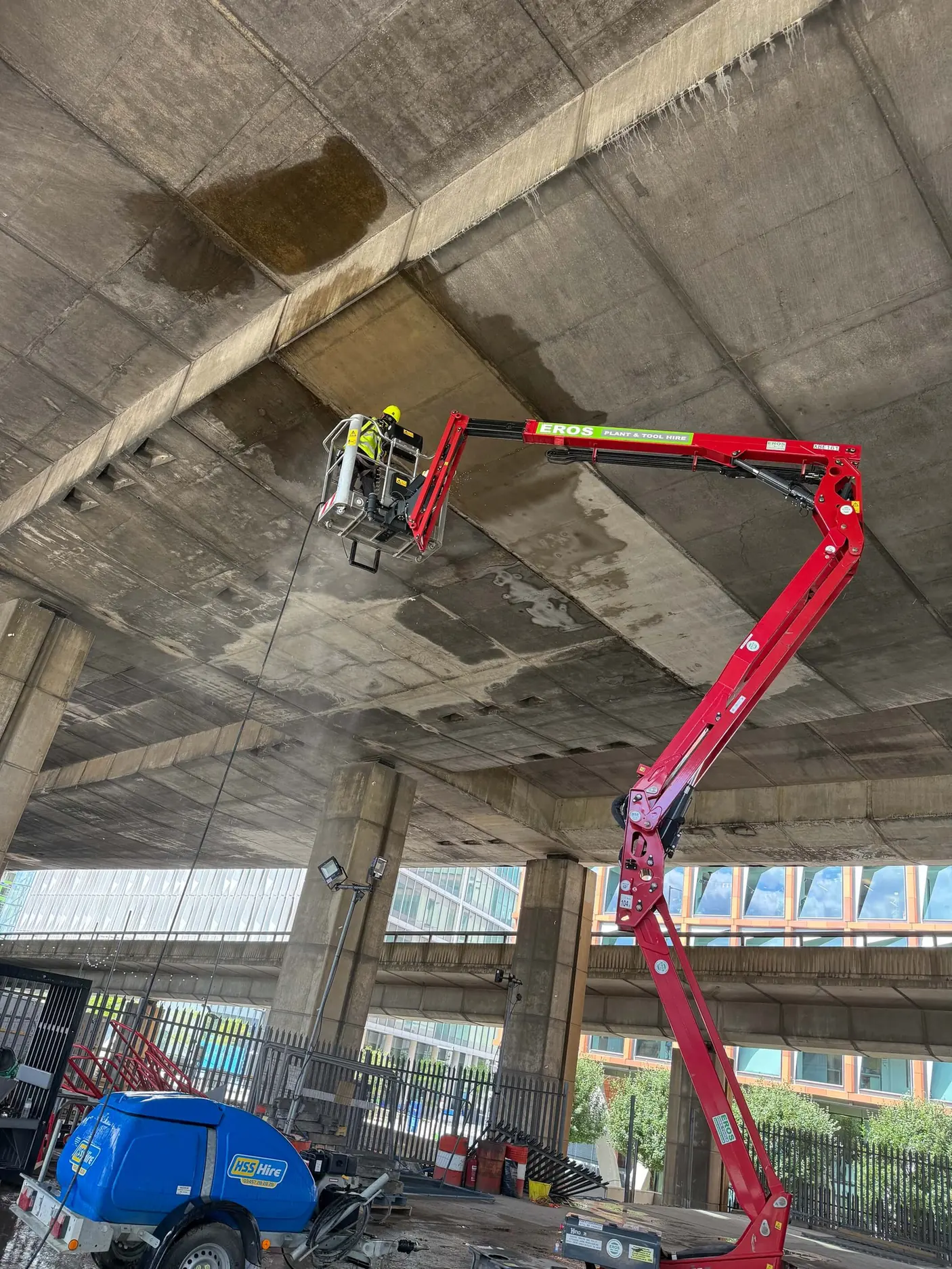
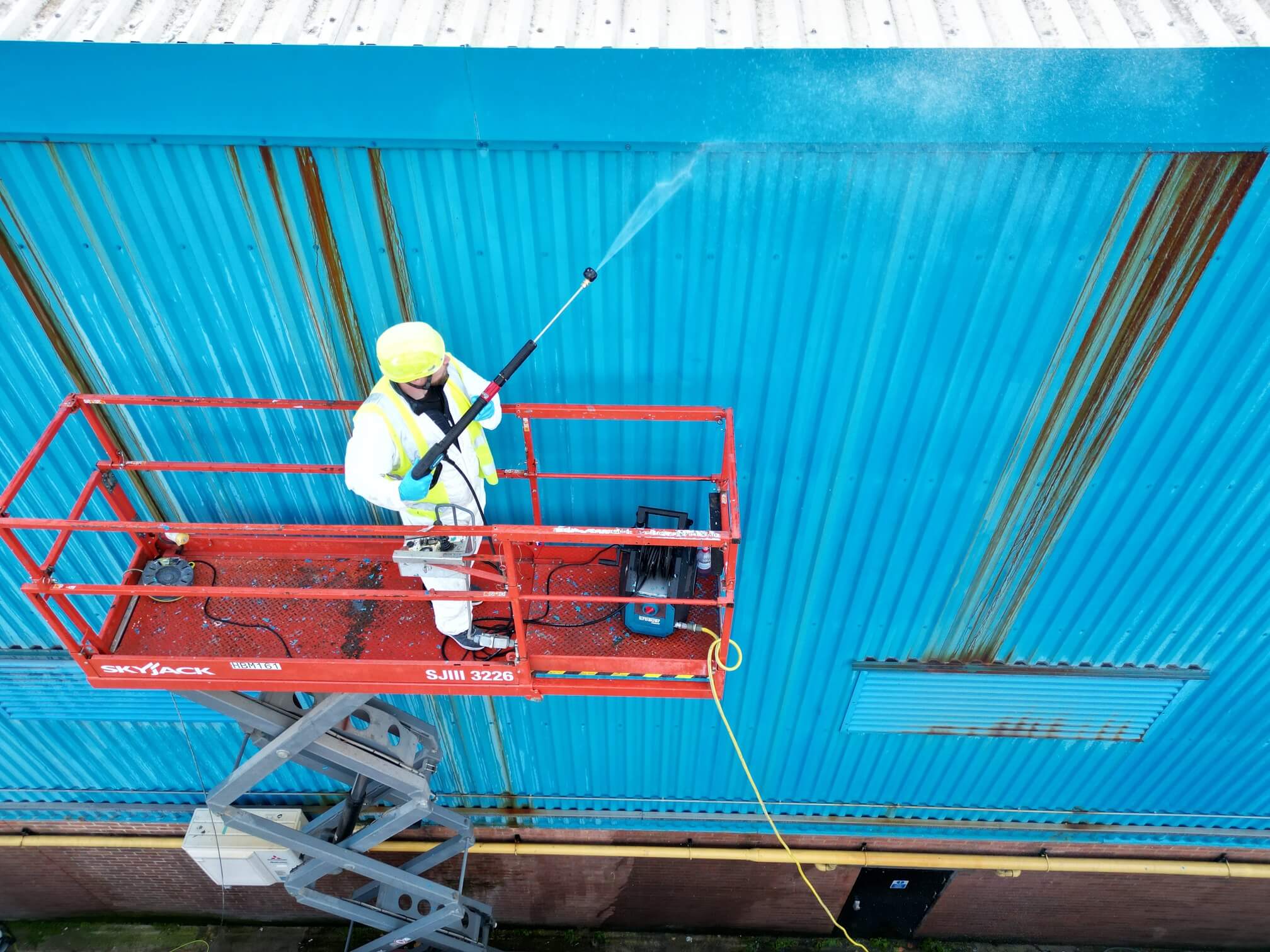
Depending on the surface and deposit, cleaning may involve controlled washing, a suitable detergent or degreaser, vacuuming or local manual work. Water pressure, temperature and mechanical action should be matched to the substrate. Maximum pressure is not automatically the best choice for a fragile finish, open joint or previously damaged coating.
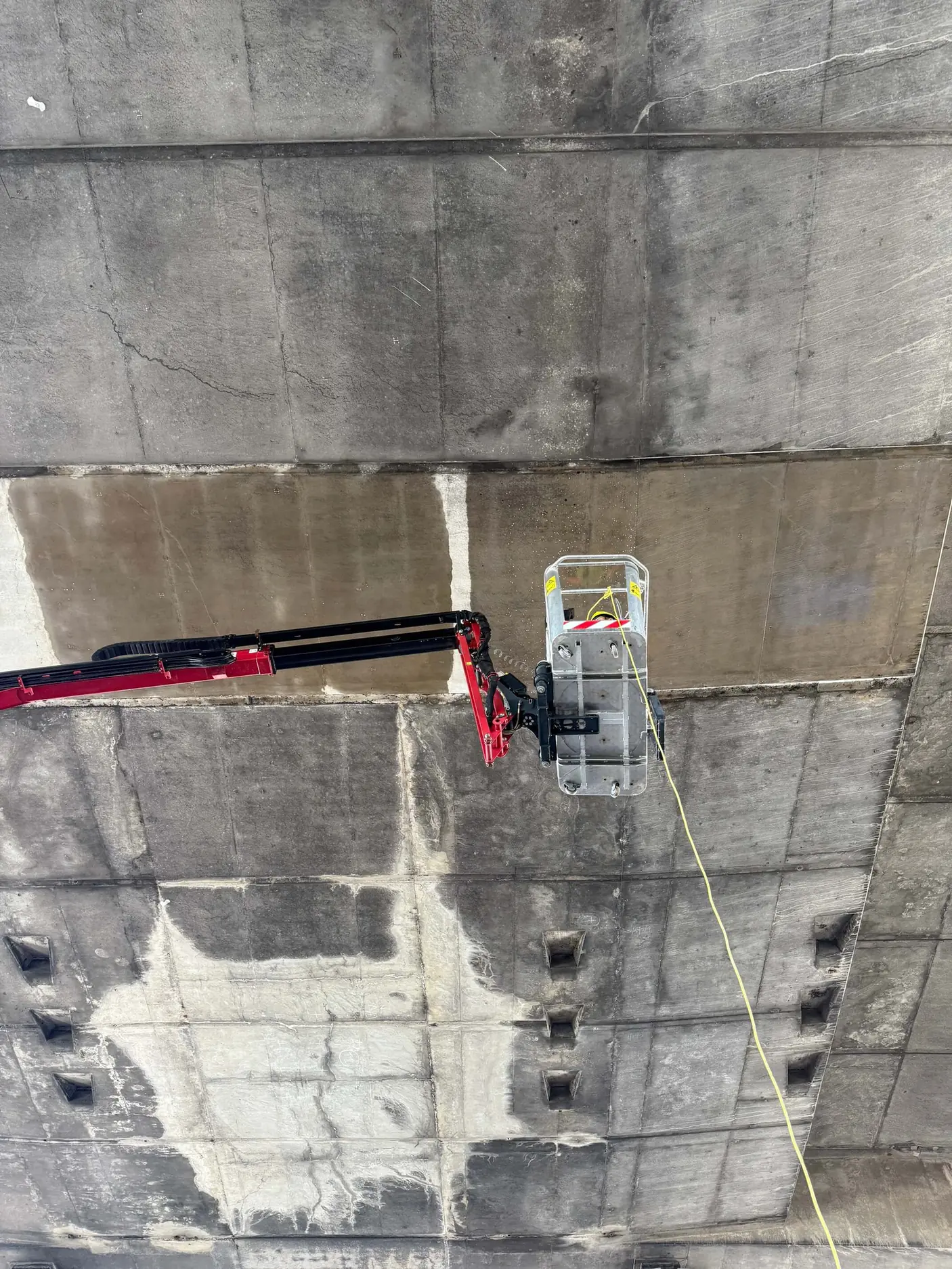
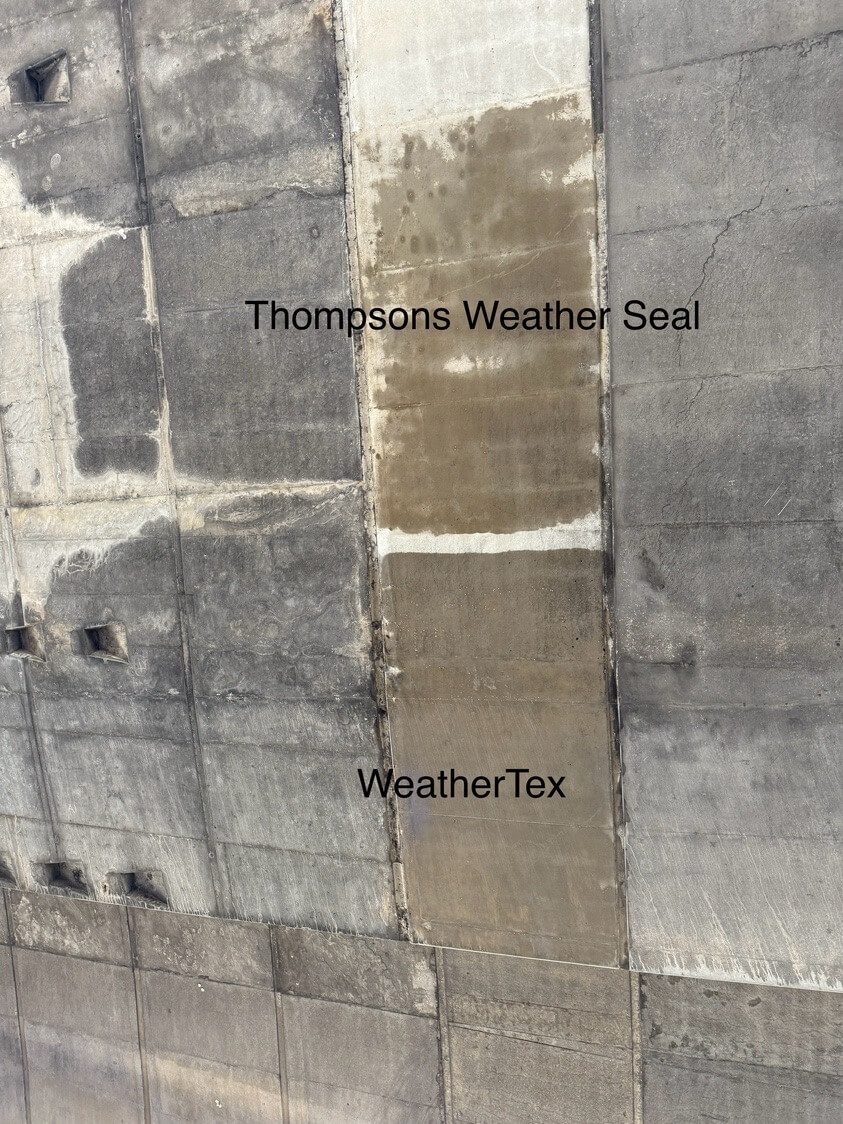
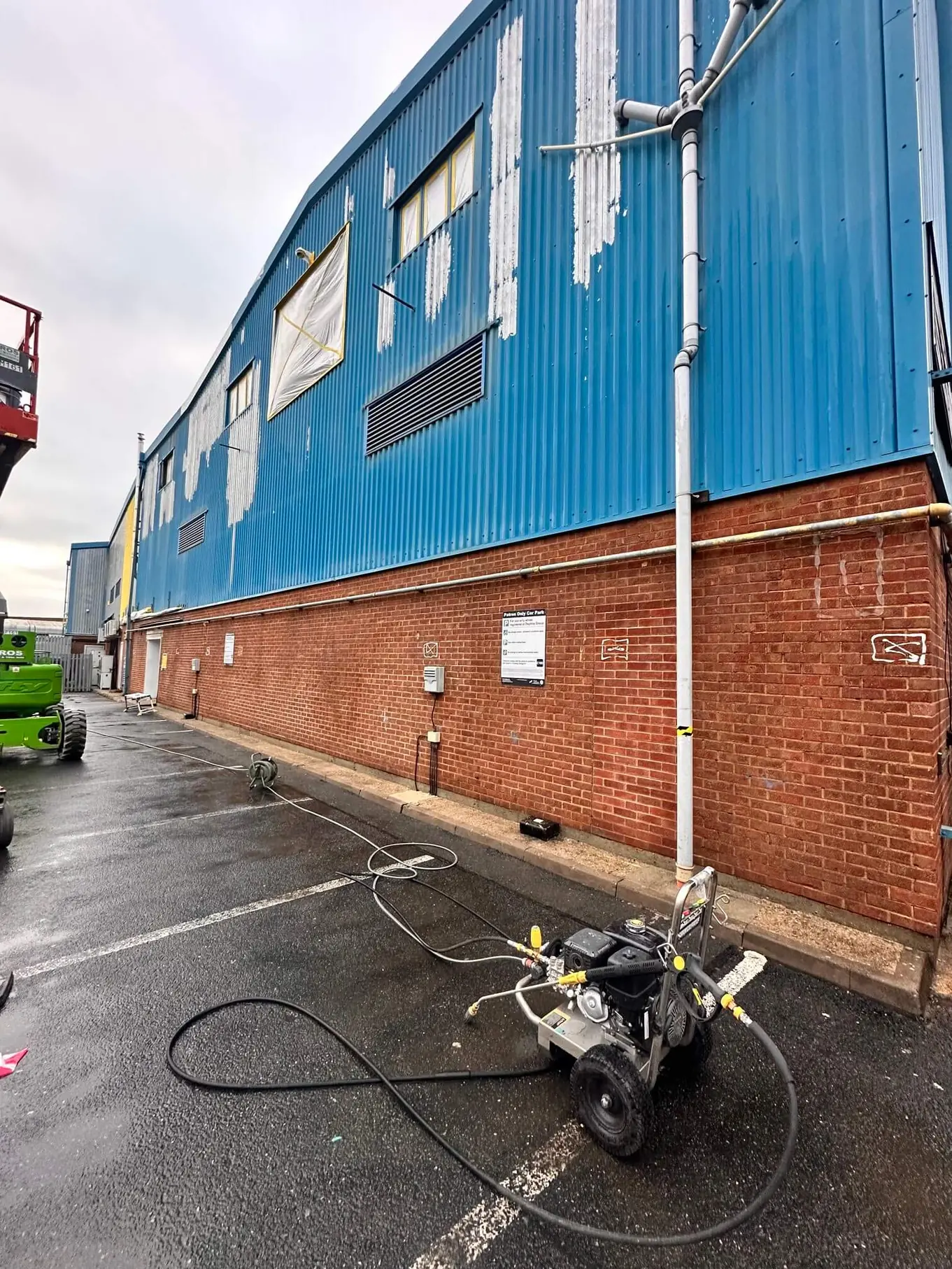
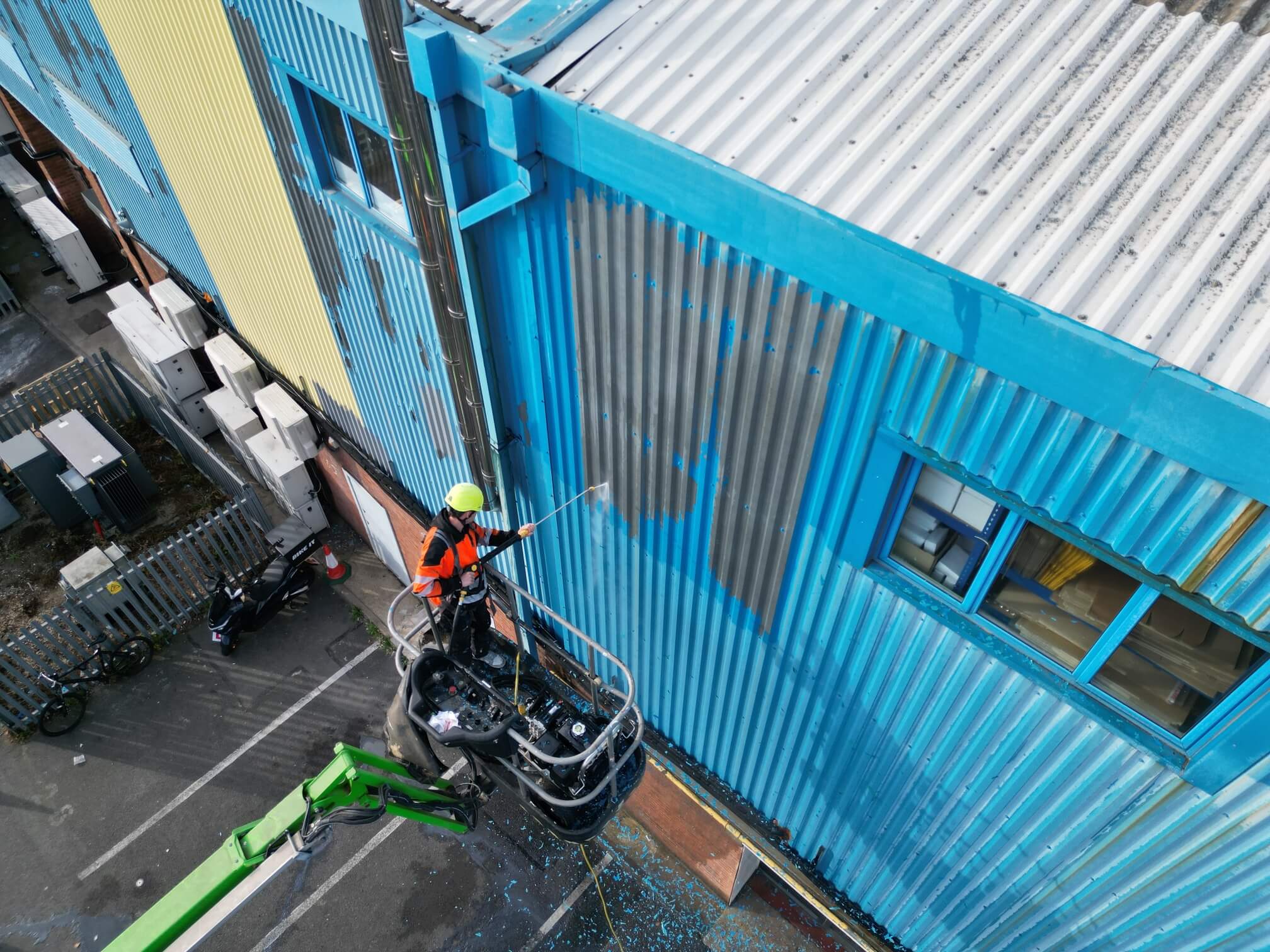
A trial area can establish how much improvement is achievable. Some stains may have penetrated the material, while apparent dirt may be discolouration or coating failure. Cleaning may reveal these defects more clearly, and it cannot restore missing or deteriorated paint.
Protection, drainage and waste
Before wet cleaning, drainage routes and the way wash water will be managed need to be understood. Water containing dirt, oils or cleaning chemicals must not simply be allowed into surface water drains. Collection, treatment or an authorised disposal route is planned for the work and site.
Doors, electrical equipment, neighbouring property and stock may need protection or separation. Where chemicals are used, product information and the site assessment determine handling and exposure controls. Cleaning must also leave routes safe from residues and avoidable slip hazards.
Working around people and equipment
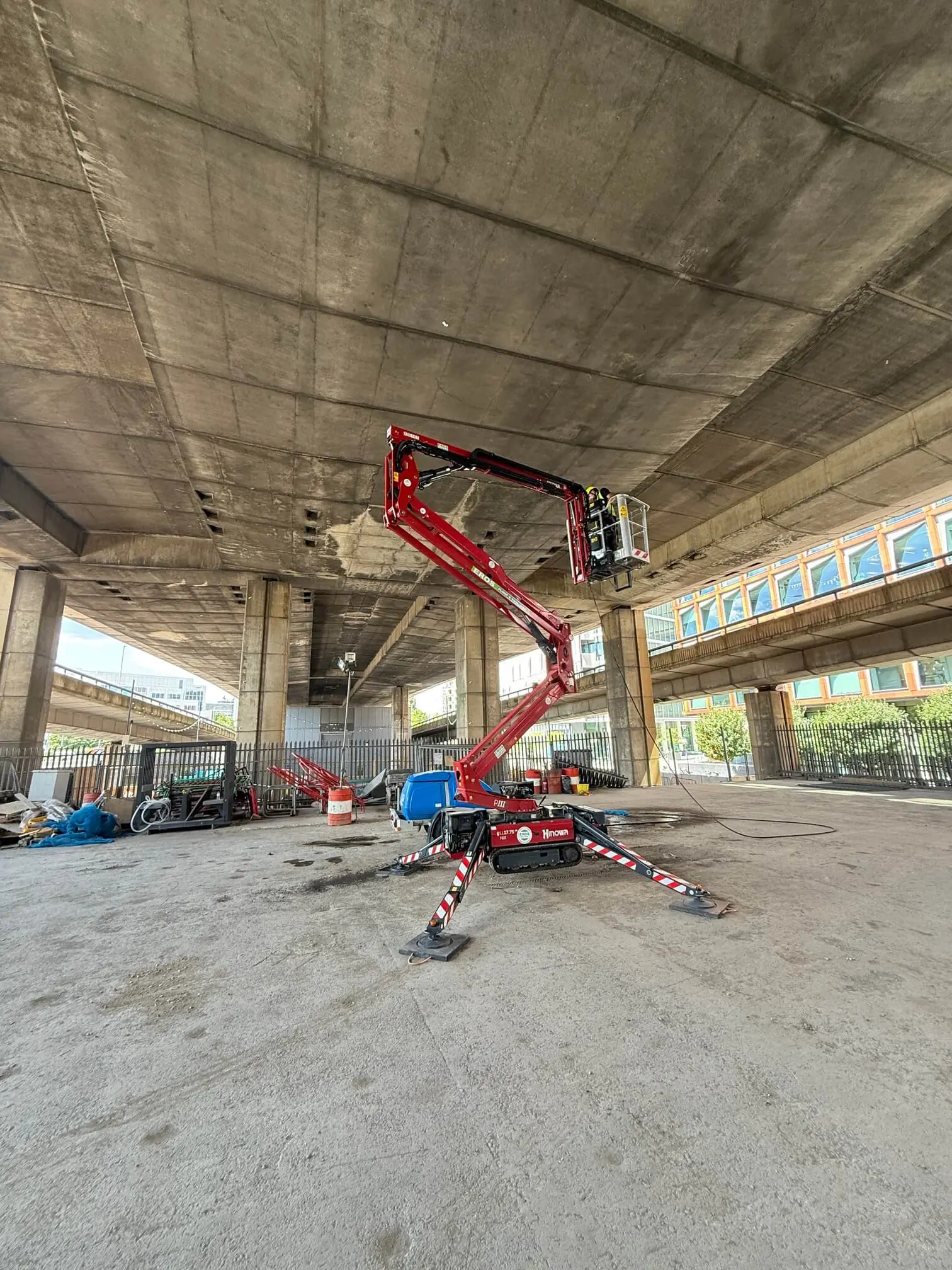
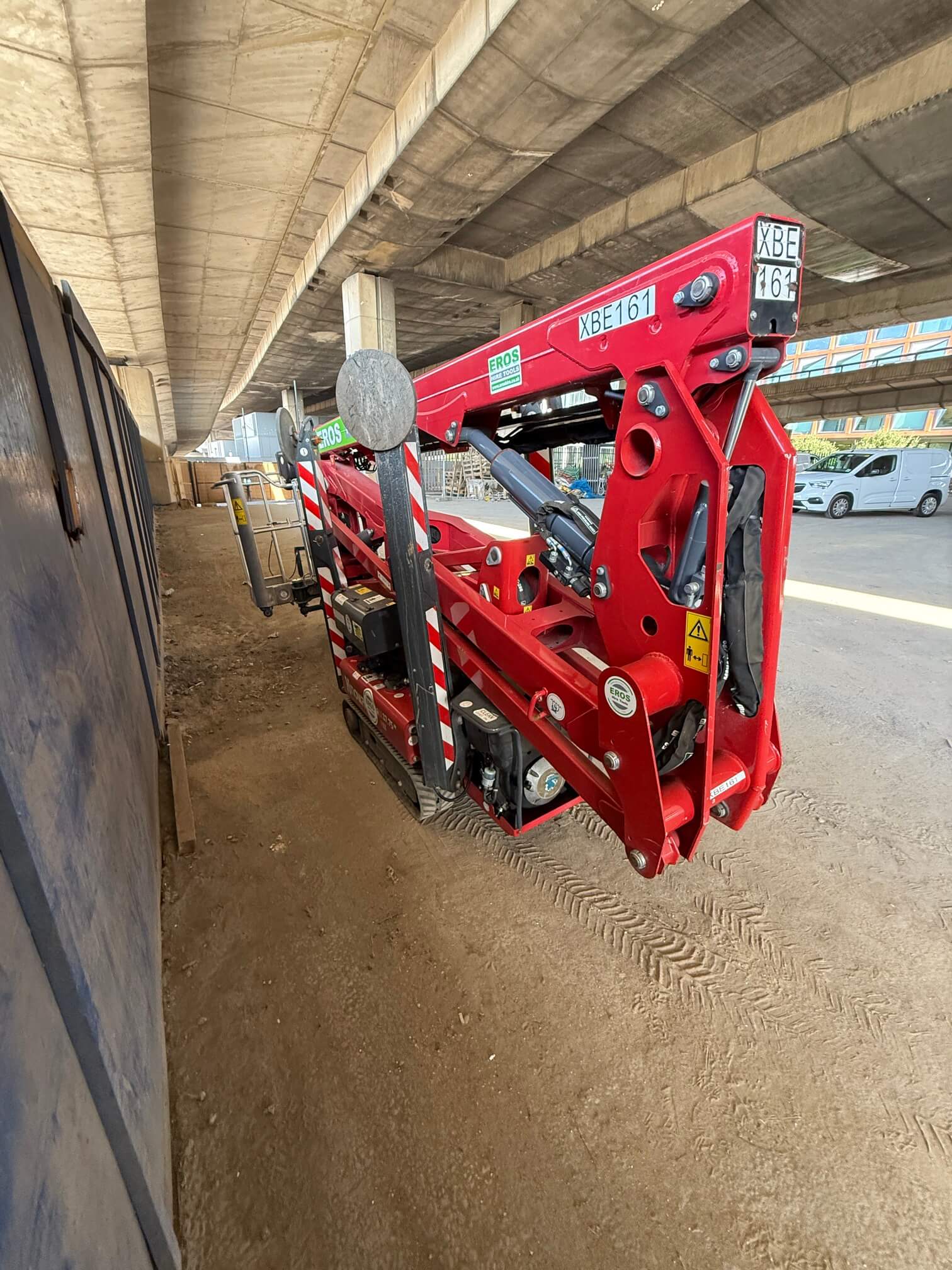
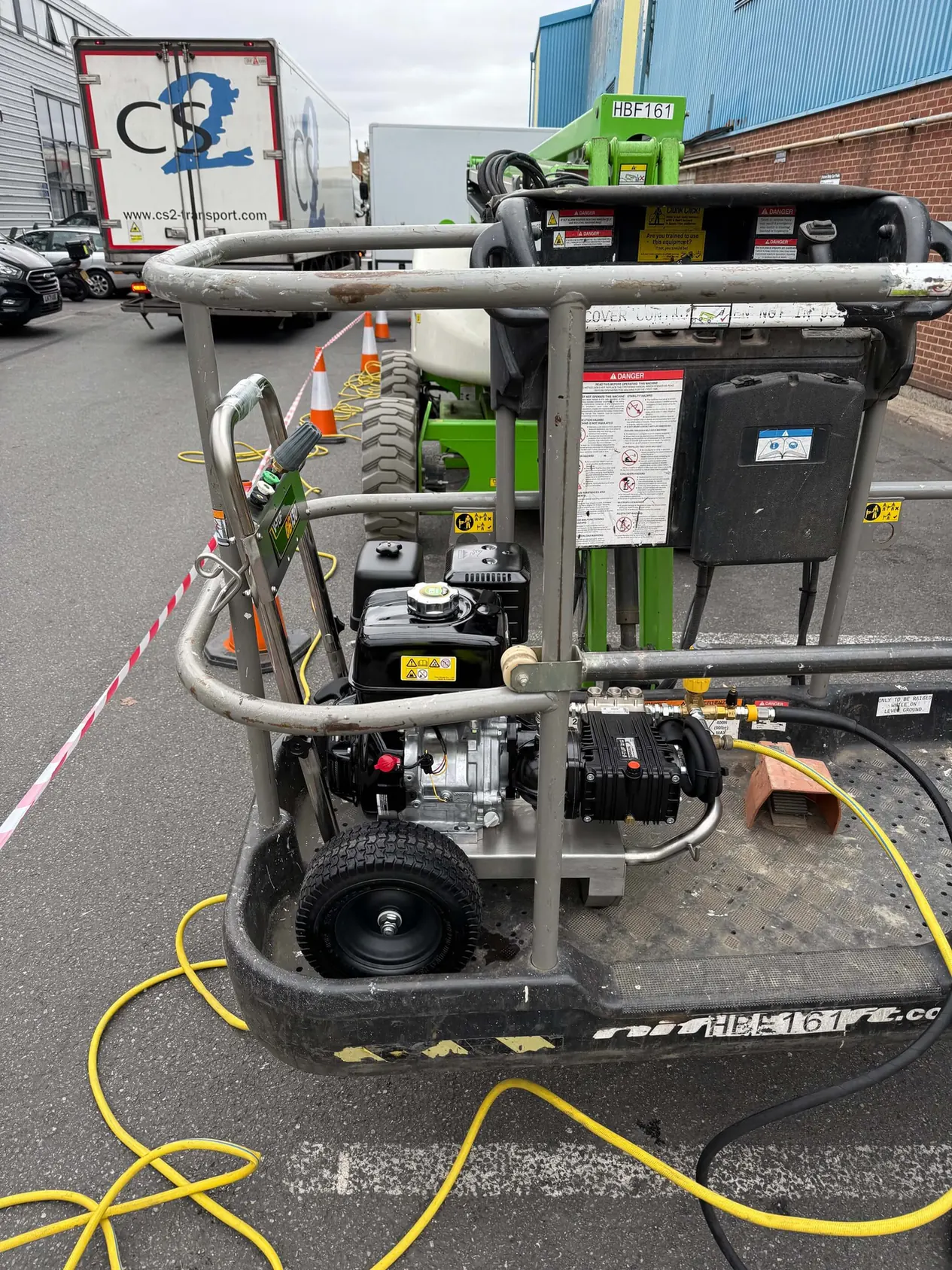
We agree working zones with the site contact and consider pedestrians, vehicle movements and deliveries. High-level cleaning may need a mobile elevating work platform or another suitable access arrangement. The available floor space and the condition of the working surface affect that choice.
Equipment requiring isolation must be managed through the site's authorised procedure before cleaning begins. Work periods, drying time and reopening arrangements should be discussed in advance so the cleaning programme fits the premises rather than interrupting an unplanned part of the operation.
A clear finish and future maintenance
The completed work is checked against the agreed scope, including any areas where permanent staining or existing damage limits the result. This gives the client a useful record of what cleaning achieved. A sensible maintenance interval can then be considered around the building's exposure and use.